

266 days left until Canoecopia! March 13 - 15
Location
Alliant Energy Center
1919 Alliant Energy Way
Madison, Wisconsin
Show Hours
Friday: 3 PM to 8 PM
Saturday: 9 AM to 6 PM
Sunday: 10 AM to 4 PM
Tickets
1-Day: $17.00
3-Day: $35.00
Ages 17 and under are FREE
Cash or check only for tickets purchased at the event
Parking Fees
1-Day: $10.00
Credit only, fees collected by Alliant Energy Center
Advanced passes may be purchased HERE.
Feedback

Alliant Energy Center
1919 Alliant Energy Way
Madison, Wisconsin
Show Hours
Friday: 3 PM to 8 PM
Saturday: 9 AM to 6 PM
Sunday: 10 AM to 4 PM
Tickets
1-Day: $17.00
3-Day: $35.00
Ages 17 and under are FREE
Cash or check only for tickets purchased at the event
Parking Fees
1-Day: $10.00
Credit only, fees collected by Alliant Energy Center
Advanced passes may be purchased HERE.
Feedback
2026 Presentations by Category
New Presenter
Bianca Boettcher
Oh the Places I Went
Sylvania - main floor Sat 10:30am-11:15am
Algonquin - main floor Sat 1:30pm-2:15pm
Sylvania - main floor Sun 12:30pm-1:15pm
Curtis Casto
The Onion Bag Solution: Empowering Paddlers to Protect Our Waters
Killarney (Spark by Hilton) - Hilton Fri 5:30pm-6:15pm
Killarney (Spark by Hilton) - Hilton Sun 10:30am-11:15am
Trash in our rivers and lakes is more than an eyesore-it's a threat to the ecosystems we love. But paddlers are uniquely positioned to be part of the solution. In this inspiring session, Curtis Casto, founder of the Onion Bag Litter Prevention Project, shares how a simple mesh bag can transform any paddling trip into an act of stewardship. Learn how the project began, how it's grown into a grassroots movement, and how paddlers across the country are using onion bags to clean up waterways-one ... Read More
Abigail Cichocki, Emma Brackett, Helena Karlstrom
The Hudson Bay Girls- Lessons Learned from 80 Days on the Water
Quetico - main floor Fri 5:30pm-6:15pm
Algonquin - main floor Sun 11:30am-12:15pm
In the summer of 2025, the Hudson Bay Girls-a team of four college-aged women-completed an 80-day, 1,381-mile canoe expedition from Lake Superior to Hudson Bay. They are the first all-female crew to publicly document their paddle along the historic fur trade route from Grand Portage to York Factory. Join them to hear stories from the trail, learn what it takes to plan a multi-month wilderness expedition, and explore how their journey connects adventure, environmental stewardship, and ... Read More
Peter Frank
4,853 mile eastern US circumnavigation by canoe
Bear - upstairs Fri 3:30pm-4:15pm
Bear - upstairs Sat 9:30am-10:15am
Algonquin - main floor Sat 2:30pm-3:15pm
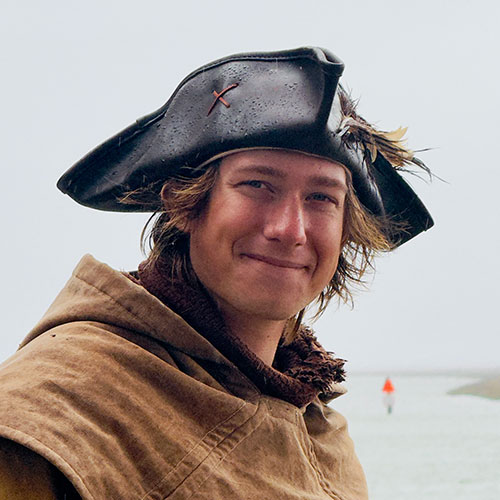 On October 20th at 9:43am, Peter Frank completed the circumnavigation of the eastern United States, "The Great Loop", becoming one of the few people to complete the route by paddle. The journey, spanning 5,043 miles, was performed solely by canoe, and took 500 days to reach the destination from whence it began. There was no dedicated support crew, he spent most nights in a tent, apart from the times he was hosted by strangers whom he met along the way. Peter started at 22 years old, and crossed ... Read More
Dave Mangin
Paddling the Potowatomi Islands
BWCA - main floor Sat 1:30pm-2:15pm
After building a rowboat for a trip downt the Mississippi River, Dave Mangin endeavored to built a kayak for a different trip through the Great Lakes and out to the Eastern Seaboard. After making it to the tip of Door County, this past summer he paddled from Rock Island, WI to Garden, MI.
Dave's presentation describes that beautiful trip into some remote parts of the Wisconsin/Michagan interface, the Potowatomi Islands. Limestone outcroppings of the Niagara Escarpment, abandoned ... Read More
Dave's presentation describes that beautiful trip into some remote parts of the Wisconsin/Michagan interface, the Potowatomi Islands. Limestone outcroppings of the Niagara Escarpment, abandoned ... Read More
Rolf Peterson
The recovery of wolves in Isle Royale National Park
Caribou - upstairs Sun 1:30pm-2:15pm
The ongoing study of wolves and moose in Isle Royale National Park has a long-term goal of understanding the role of wolves in this isolated and protected ecosystem. The National Park Service re-established a wolf population in 2018-2019 after the recent native population virtually died out from inbreeding, caused by dwindling ice formation on Lake Superior. Wolves have been shown to have a major influence on the population dynamics of moose as the two species fluctuate in a roughly inverse ... Read More
Riley Smith
The Ephemeral Joys of November Canoe Trips in the BWCAW
Bear - upstairs Fri 5:30pm-6:15pm
Bear - upstairs Sat 2:30pm-3:15pm
Hundreds of thousands come to visit the Boundary Waters every summer, and for good reason. As the seasons begin to turn and the nights grow colder, only a select few continue paddling into October, November, or even....December? Join us as we discuss the tentative nature of the tail of shoulder season, when the exchange of a paddle for skis is only weeks apart. We'll discuss the challenges of ice-up, route planning, fading daylight, temperature management, assessing risk, and making the most of ... Read More
Seth Taft
Friendship Matters: The Trail Ahead for Wisconsin State Parks
Sylvania - main floor Fri 4:30pm-5:15pm
BWCA - main floor Sun 2:30pm-3:15pm
For 125 years, Wisconsin's State Park System has been a cornerstone of our state's identity - connecting people to nature, supporting local economies, and preserving the landscapes that define us. Today, as our parks face record visitation alongside chronic underfunding, we stand at a pivotal moment for stewardship and sustainability.
This session will explore the current state of Wisconsin's State Park System, highlighting the successes, challenges, and opportunities that define ... Read More
This session will explore the current state of Wisconsin's State Park System, highlighting the successes, challenges, and opportunities that define ... Read More
Beverly Vaillancourt
The Story of the Baraboo River
Caribou - upstairs Fri 6:30pm-7:15pm
Sylvania - main floor Sat 12:30pm-1:15pm
The Baraboo River carries a deep and layered history. Long before Euro-American settlement, Indigenous Peoples lived and thrived along its banks. In the mid-1700s, a trading fort where the Baraboo and Wisconsin Rivers meet, marking the beginning of a new era. As settlers arrived, the river powered mills and fueled small towns, grinding wheat and corn to support a growing agricultural economy. Dams spread across the river, reshaping its flow for small industries that powered the economy of the ... Read More
Marcy West
Water Lovers Role in Protecting Landscapes
Killarney (Spark by Hilton) - Hilton Fri 6:30pm-7:15pm
Killarney (Spark by Hilton) - Hilton Sat 12:30pm-1:15pm
Utilizing the lessons learned in the timeline of the failed La Farge Lake and Dam project to the unique protections for the 8,600-acre Kickapoo Valley Reserve in southwest Wisconsin, Marcy will clearly illustrate why water lovers need to care about the larger landscapes. Weaving politics, behind the scenes anecdotes, and life lessons offers audience members some thought-provoking methods they can use in their own backyard.
|
Location Alliant Energy Center 1919 Alliant Energy Way Madison, Wisconsin Show Hours Friday: 3 PM to 8 PM Saturday: 9 AM to 6 PM Sunday: 10 AM to 4 PM |
Tickets 1-Day: $17.00 3-Day: $35.00 Ages 17 and under are FREE Cash or check only for tickets purchased at the event
|
Parking Fees 1-Day: $10.00 Credit only, fees collected by Alliant Energy Center Advanced passes may be purchased HERE. Feedback |
 | ||||||
 |
 |
 |
||||
| ||||||